This 65-Year-Old Outsmarted Her Kids with a 2-Minute Brain Trick
Saturday, June 21, 2025

This 65-Year-Old Grandma Outsmarted Her Kids with a 2-Minute Brain Trick
For many older adults, forgetfulness has become a quietly growing fear - one missed appointment, one forgotten name, and suddenly you’re wondering if it’s “just aging” or something more serious.
The truth is, occasional forgetfulness is common. But accepting cognitive decline as inevitable? That’s a mistake.
Here’s the story of how one 65-year-old woman refused to do just that - and the surprising 2-minute brain trick that helped her reclaim her independence.
Barbara wasn’t ready to give up the checkbook
Barbara, a retired accountant and grandmother of three, prided herself on her mental sharpness.
But after a few awkward memory slips - like double-paying bills and forgetting her grandson’s birthday - her adult children sat her down.
“Mom,” they said gently, “maybe we should help you with the finances from now on.”
Barbara was humiliated.
But instead of surrendering to the assumption that she was “getting too old,” she went looking for answers
The brain-boosting ritual that changed everything
What she found wasn’t a prescription or a puzzle app-but a simple, 2-minute daily brain ritual.
Backed by neurologists and packed with science, this technique used specific mental stimulation combined with a nutritional protocol targeting inflammation and neurotransmitter health.
In just a few weeks, Barbara noticed:
- Faster word recall during conversations
- More mental stamina throughout the day
- Confidence when managing her accounts and calendar
The change was so obvious that even her kids admitted, “Wow, Mom - you’re sharper than we are!”
Why brain decline isn’t “just aging”
Most people don’t realize that many causes of memory decline are preventable.
From inflammation and stress to nutrient deficiencies and poor sleep, the brain is vulnerable - but also highly responsive to change.
Studies show that specific compounds - like flavonoids, phosphatidylserine, and omega-3s can repair neural pathways, support neurotransmitter balance, and even grow new brain cells.
And here’s the kicker: some of these changes can start in just minutes a day.
Small choices lead to big changes.
Barbara’s story isn’t unique. Thousands of people over 60 are rediscovering their mental edge through simple lifestyle tweaks and targeted support.
They’re refusing to be sidelined. And they’re proving that memory loss doesn’t have to define the second half of life.
If you’ve felt your mental edge slipping or if you’ve been brushed off with, “It’s just part of aging”, it might be time to try Barbara’s 2-minute brain trick for yourself.
Your independence might just thank you for it.
Alex Rowen,
Thrive After 50
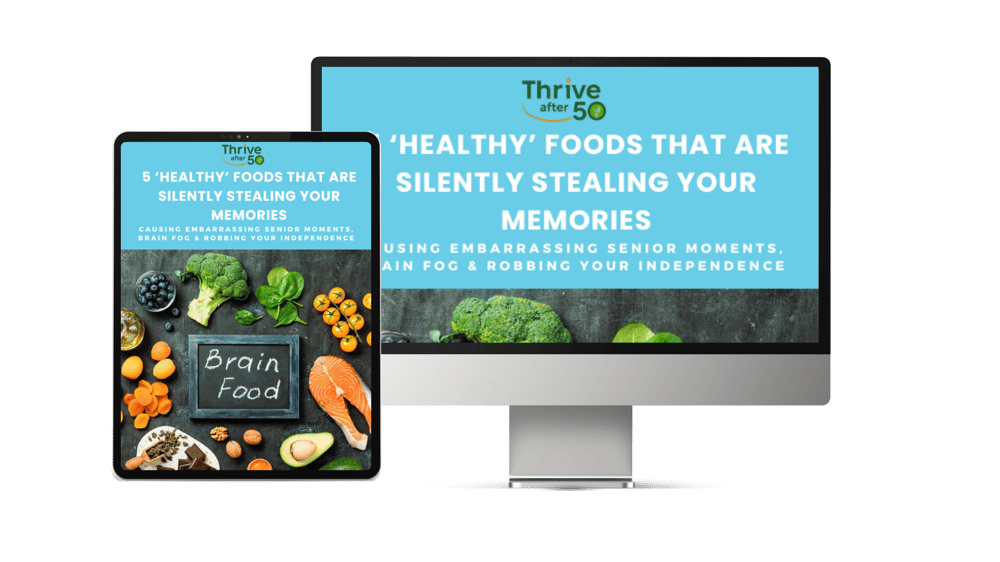
5 'Healthy' Foods That Are Silently Stealing Your Precious Memories
You’ve been eating these for years… not knowing they could shrink your brain. But now, neurologists are warning they may actually speed up memory loss.
If you want to stop those scary senior moments and forgetfulness STOP eating these 5 foods TODAY!
Enter your email below to discover the 5 worst 'healthy' foods that are causing brain fog, forgetfulness and embarrassing senior moments
Please Make Sure Your Email Is Correct
This report, valued at $19.95, is 100% FREE. No credit card required. You'll also receive our free fit tips e-newsletter from Thrive After 50. Your information is 100% secure and will never be shared with anyone.